Gordon Brown recently set out a stark picture of civic life in the UK.
Drawing on research for his book, he reported that:
• 45% of people in the UK are not part of any civic organisation
• Only 17% do any form of volunteering
• Just 1 in 50 are members of a political party
• Only 15% believe they have a say locally
• Only 7% believe they have a say nationally
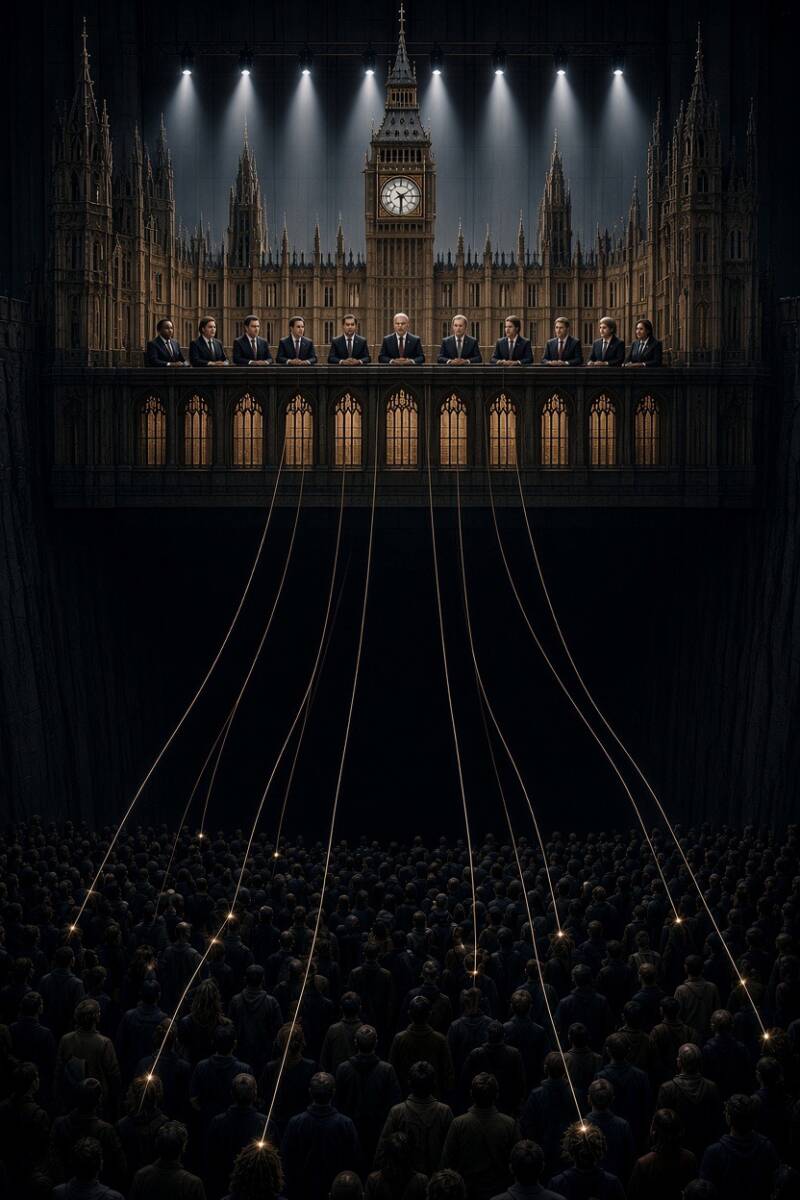
These figures are not abstract. They describe a country in which the majority of people experience politics and public life as something that happens elsewhere.
Brown linked this disconnection to the wider break-up of the post-war order and to the rise of populism. Financial disillusionment is widely discussed. The erosion of local belonging and the sense of having no real voice are discussed far less, yet they sit underneath much of the present discontent.
Since the 1960s, he argued, societies prioritised individual autonomy while neglecting social responsibility and the practical means for people to shape their common life. The result is a population that is formally free and substantively powerless in the decisions that most affect them.
His proposed responses included investment in civic infrastructure, genuine devolution of power and budgets to local communities, citizens’ assemblies, and stronger civic education. These are serious suggestions. They also stop short of the deeper question.
If only 7% of people feel they have a say nationally and only 15% locally, the problem is not merely insufficient consultation. It is that the dominant model of democracy still treats most citizens as periodic spectators who select representatives and then wait. Citizens’ assemblies and local budgets can help. They remain limited if the underlying structure continues to concentrate real decision-making power in the hands of a few.
Direct democracy takes the diagnosis further. It insists that people should have structured, ongoing ways to deliberate and decide on the matters that shape their lives — not only the right to vote for someone else who will decide. The statistics Brown cited show how far current arrangements have drifted from that standard. When almost half the population belongs to no civic body and the overwhelming majority feel they have no meaningful say, the claim that the system already delivers self-government becomes difficult to sustain.
The numbers do not require despair. They require honesty. A democracy in which only a small fraction of people believe their voice counts is a democracy that has hollowed out its own foundation. Rebuilding that foundation means returning power to a scale at which people can actually exercise it together — in communities, in assemblies, and in decisions that are binding rather than advisory.
The alternative is to continue managing the symptoms of disconnection while leaving the structure of power unchanged. The figures already tell us where that leads.
Add comment
Comments